

10 Island Destinations From Wild to Wilder
Most trips to Vancouver Island follow a familiar loop: Victoria, Tofino, perhaps a detour to the Cowichan Valley before turning back south. But the farther north you travel, the more the Island begins to show its true character. Roads thin out. Rainforest grows heavier. Communities become smaller, older, and more closely tied to the sea. The coastline shifts from scenic to elemental.
If you’re wondering where to go next on Vancouver Island—beyond the highlights and into places that still feel raw, culturally grounded, and shaped by water—these are our top picks.

Points of Interest

Ports
1. Alert Bay
Alert Bay sits on Cormorant Island, the traditional territory of the ‘Namgis First Nation, and remains one of the most culturally significant communities on the coast. Its renowned U’mista Cultural Centre houses one of the world’s most important potlatch collections—ceremonial regalia confiscated during the 1922 potlatch ban and returned decades later in an extraordinary act of cultural homecoming.
The village itself invites slow exploration: weathered boardwalks, historic buildings, and the world’s tallest totem pole standing watch near the First Nations Big House. Alert Bay offers cultural grounding before the journey continues into places where villages no longer stand intact—but their presence remains.

Photo: Jeff Reynolds
The U’mista Cultural Centre in Alert Bay safeguards one of the world’s most significant collections of Kwakwaka’wakw ceremonial regalia, returned after being confiscated during the 1922 potlatch ban. Its name means “the return of something important.”
How to get here: Drive to Port McNeill and take the short BC Ferries crossing to Cormorant Island. No car is needed once there.
2. Village Island
Village Island, homeland of the Mamalilikulla, is one of the most atmospheric cultural sites on the coast. Visiting with a Kwakwaka’wakw guide gives shape to the remnants of village life—posts softened by moss, beaches shaped by ancient seasonal rhythms, and a silence that feels like it has its own weight.
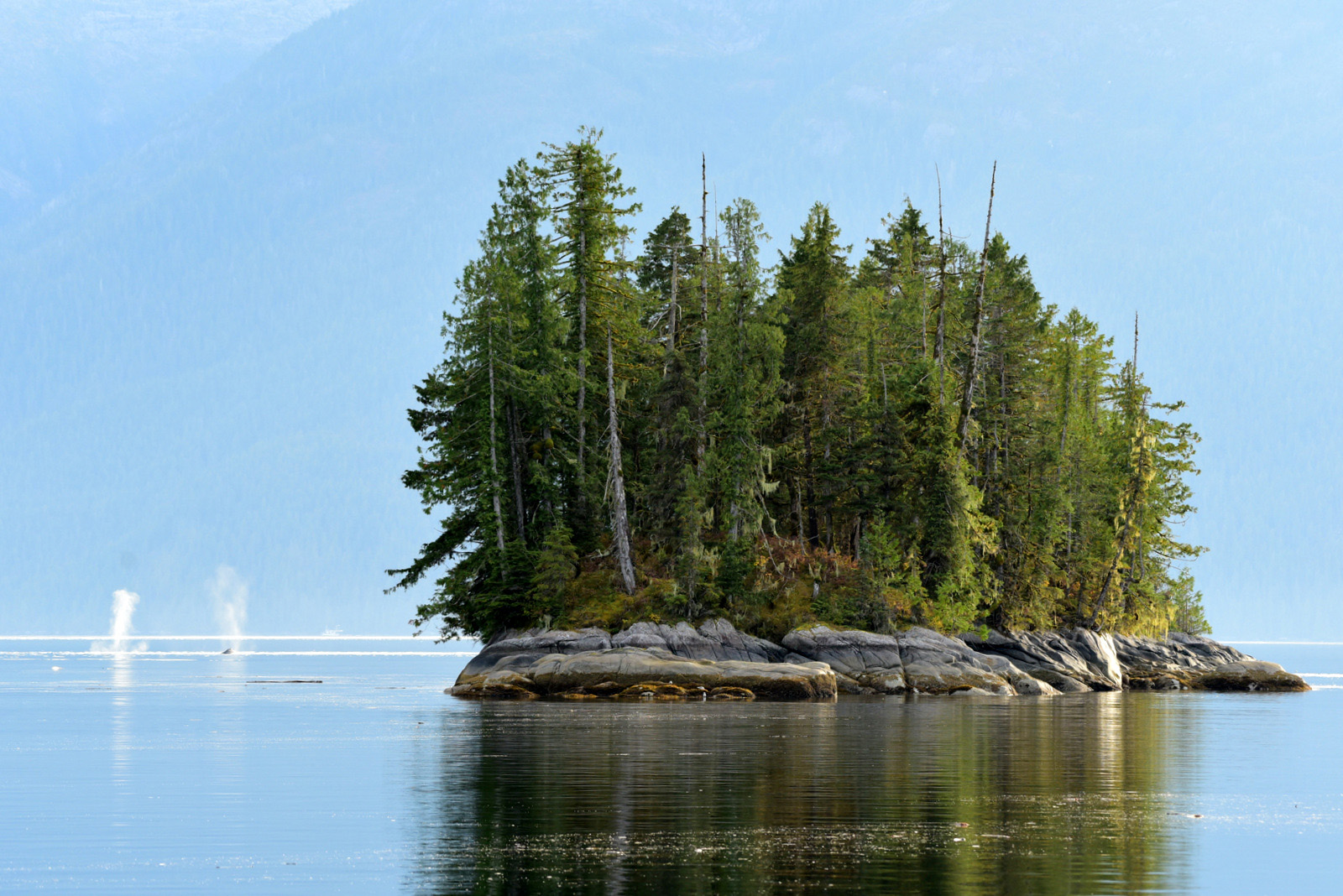
Photo: Maple Leaf Adventures
Whales are often seen feeding in the nutrient-rich waters around Village Island, where tidal currents concentrate herring and krill. These protected passages have become important seasonal foraging grounds along the Inside Passage.
Getting there: Accessible only by boat from Telegraph Cove, Port McNeill, or via guided expedition.
3. The Broughton Archipelago
North of Vancouver Island lies the Broughton Archipelago, B.C.’s largest marine provincial park and one of its least altered. Dozens of undeveloped islands, kelp-fringed passages, and quiet, forested islets create a labyrinth of sea and silence. Evidence of centuries of Indigenous presence—clam gardens, culturally modified trees, archaeological village sites—lies throughout the landscape for those who travel respectfully and with knowledge.
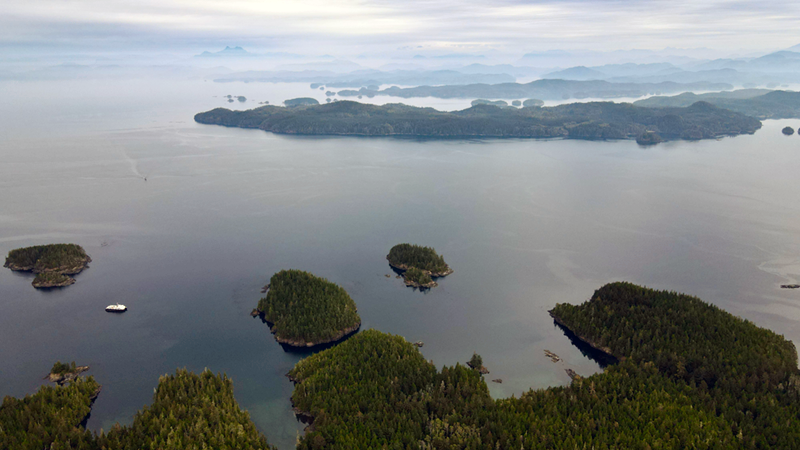
Photo: Kevin Smith
The Whale Interpretive Centre at Telegraph Cove has long served as a research and education hub for coastal cetaceans, featuring one of British Columbia’s largest collections of whale skeletons. Following the 2024 fire, the centre is working toward reopening in May.
This is a place for kayakers, wildlife lovers, or travellers who simply want to anchor somewhere no road has ever reached.
How to get here: Most visitors launch from Telegraph Cove, Port McNeill, or Port Hardy by water taxi, kayak, or small boat. There is no road access into the archipelago—planning and weather awareness are essential.
4. Telegraph Cove
Once a 1912 sawmill and cannery settlement, Telegraph Cove grew into a beloved historic boardwalk community and one of the island’s gateways to orca and humpback habitat. Its cedar-plank walkways, heritage houses, and Whale Interpretive Centre drew travellers from around the world.
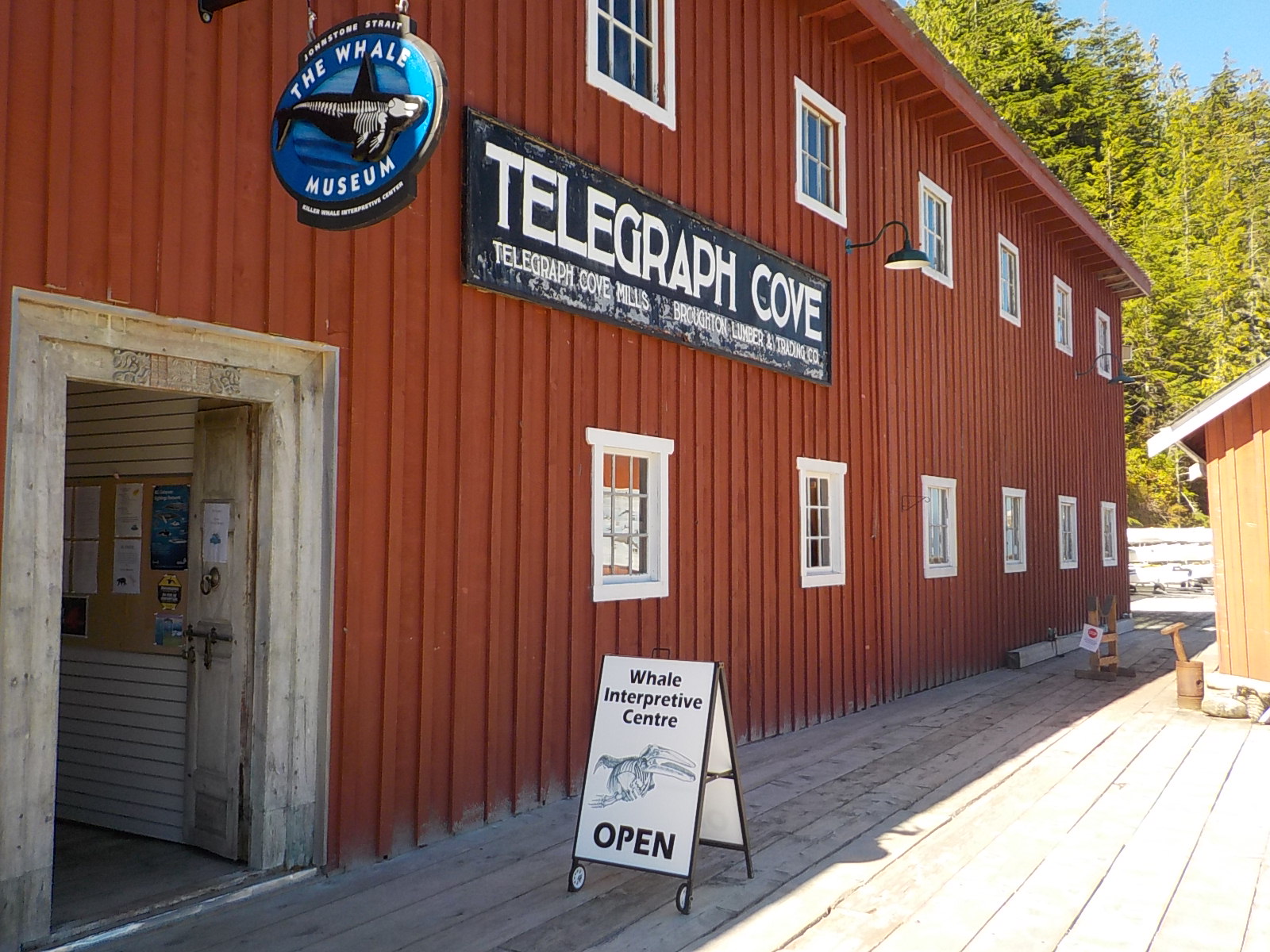
Photo: Maple Leaf Adventures
The Whale Interpretive Centre at Telegraph Cove has long served as a research and education hub for coastal cetaceans, featuring one of British Columbia’s largest collections of whale skeletons. Following the 2024 fire, the centre is working toward reopening this year.
On December 31, 2024, a devastating fire destroyed much of the waterfront core—including the interpretive centre, the pub, cafés, and rows of historic buildings. The loss stunned the region. Visiting during its rebuild is an act of support. Your presence helps ensure that this essential coastal village—and the stories it carried—have a future.
How to get here: Telegraph Cove is a 20-minute drive south of Port McNeill. The village is small, walkable, and built around a compact harbour.
5. Blackfish Sound
Just offshore from Telegraph Cove, Blackfish Sound is a corridor of nutrient-rich water that draws whales, porpoises, sea lions, and seabirds throughout the season. Kayakers and small-boat travellers prize the area for its gentle labyrinth of channels and the high likelihood of wildlife sightings without the crush of large crowds. With travellers seeking more sustainable, respectful wildlife encounters, Blackfish Sound stands as a model for quiet, low-impact viewing.
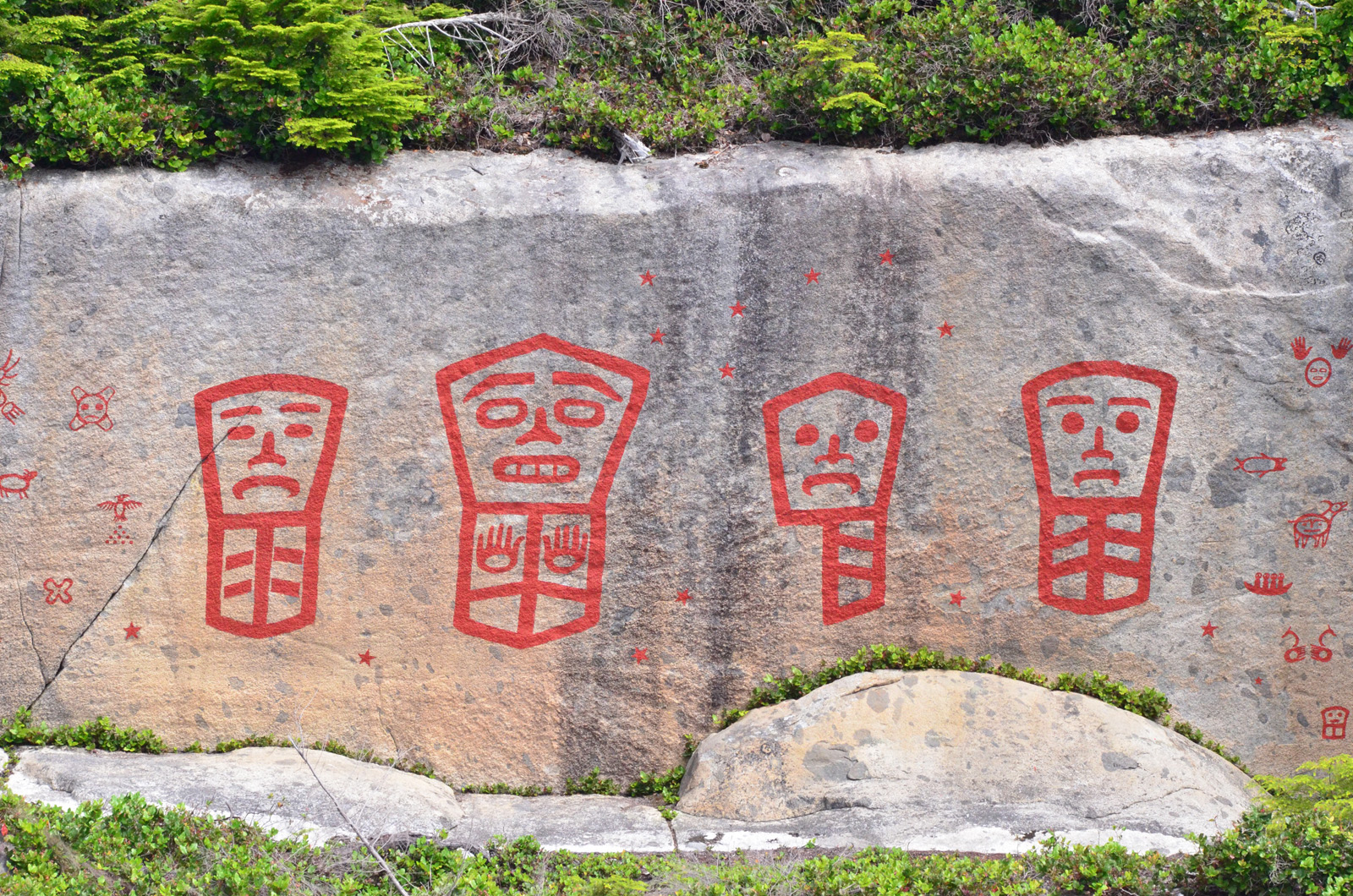
Photo: Maple Leaf Adventures
Ancient pictographs mark culturally significant sites along travel routes used for generations by Coastal First Nations.
How to get here: Launch from Telegraph Cove or nearby Port McNeill via kayak outfitters or wildlife tour operators. Conditions can shift quickly, so guided trips are recommended.
6. Hanson Island
Hanson Island sits between the Broughton Archipelago and Blackfish Sound, offering forested trails, mossy headlands, quiet beaches, and that rare combination of rainforest stillness and ocean energy. It’s not a place of big infrastructure—and that’s the point.
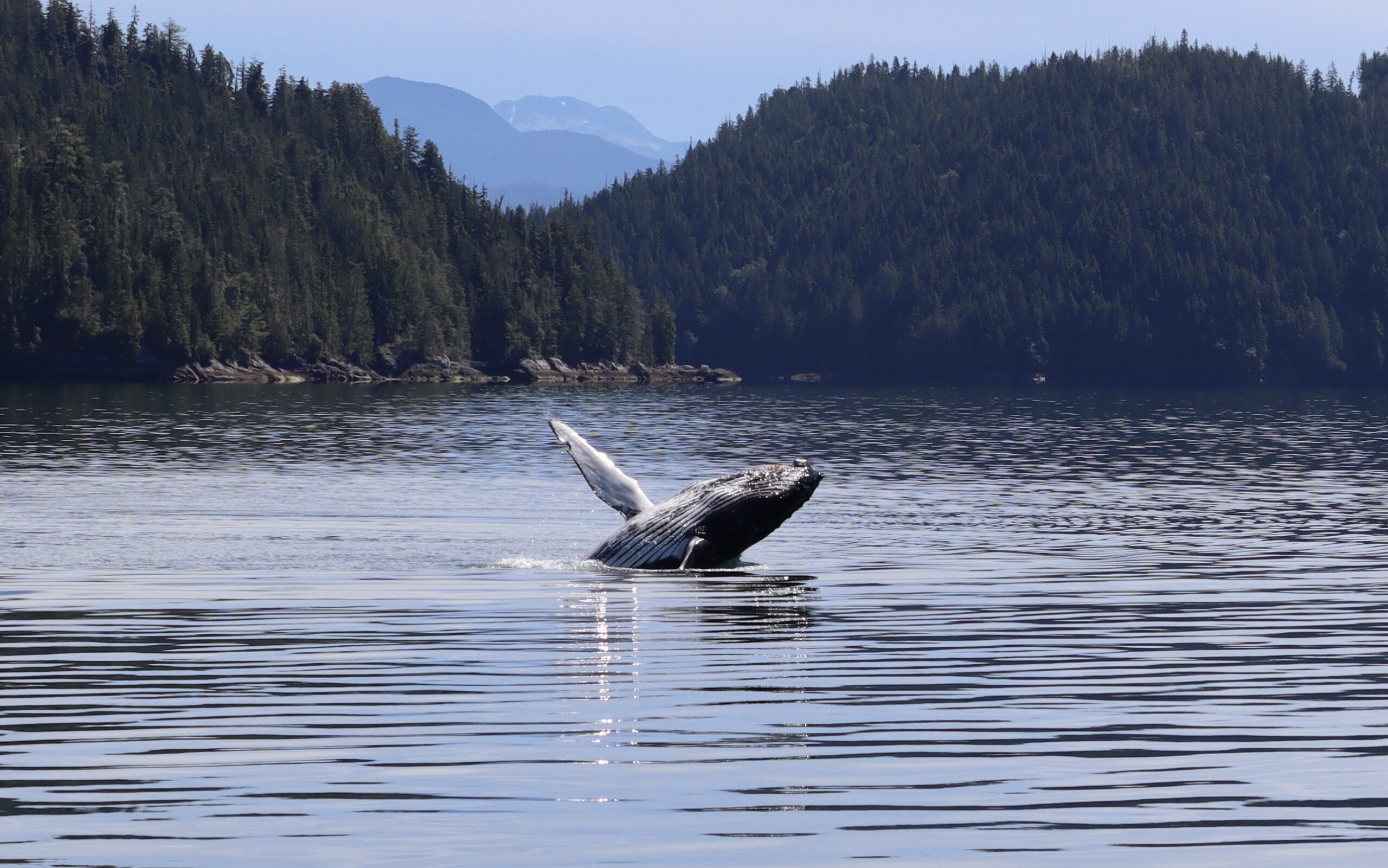
Photo: Maple Leaf Adventures
Humpback whales frequent the waters around Hanson Island during the feeding season, where strong tidal flows support dense prey concentrations. Breaching is thought to play a role in communication and social behavior.
How to get here: Access is by boat only, typically from Telegraph Cove or Port McNeill via water taxi or guided expedition. There are no public roads or services.
7. Brooks Peninsula
Far out on the west coast, Brooks Peninsula juts into the Pacific like a fist — a glacial-era refuge untouched by the last Ice Age. No roads reach it. No towns border it. Instead: ancient forest dripping with lichen, mist-wrapped ridges, vast, empty beaches, and offshore rocks alive with seabirds.
This is Vancouver Island at its rawest.

Photo: Kevin Smith
Anchored off Brooks Peninsula, Maple Leaf sits at the edge of one of Vancouver Island’s most intact outer-coast ecosystems. The peninsula’s ancient rainforest and exposed shoreline escaped the last Ice Age, creating a rare ecological refuge.
How to get here: Access requires a boat, floatplane, or a guided expedition. Weather is highly variable, and landings can be challenging—this is not a beginner destination.
8. Kyuquot Sound
Kyuquot blends wild outer-coast landscapes with the warmth of remote coastal hospitality. Sea otters raft through kelp forests, salmon runs thread through the bays, and local hosts offer touches of comfort—from cozy lodges to traditional salmon-bake dinners.
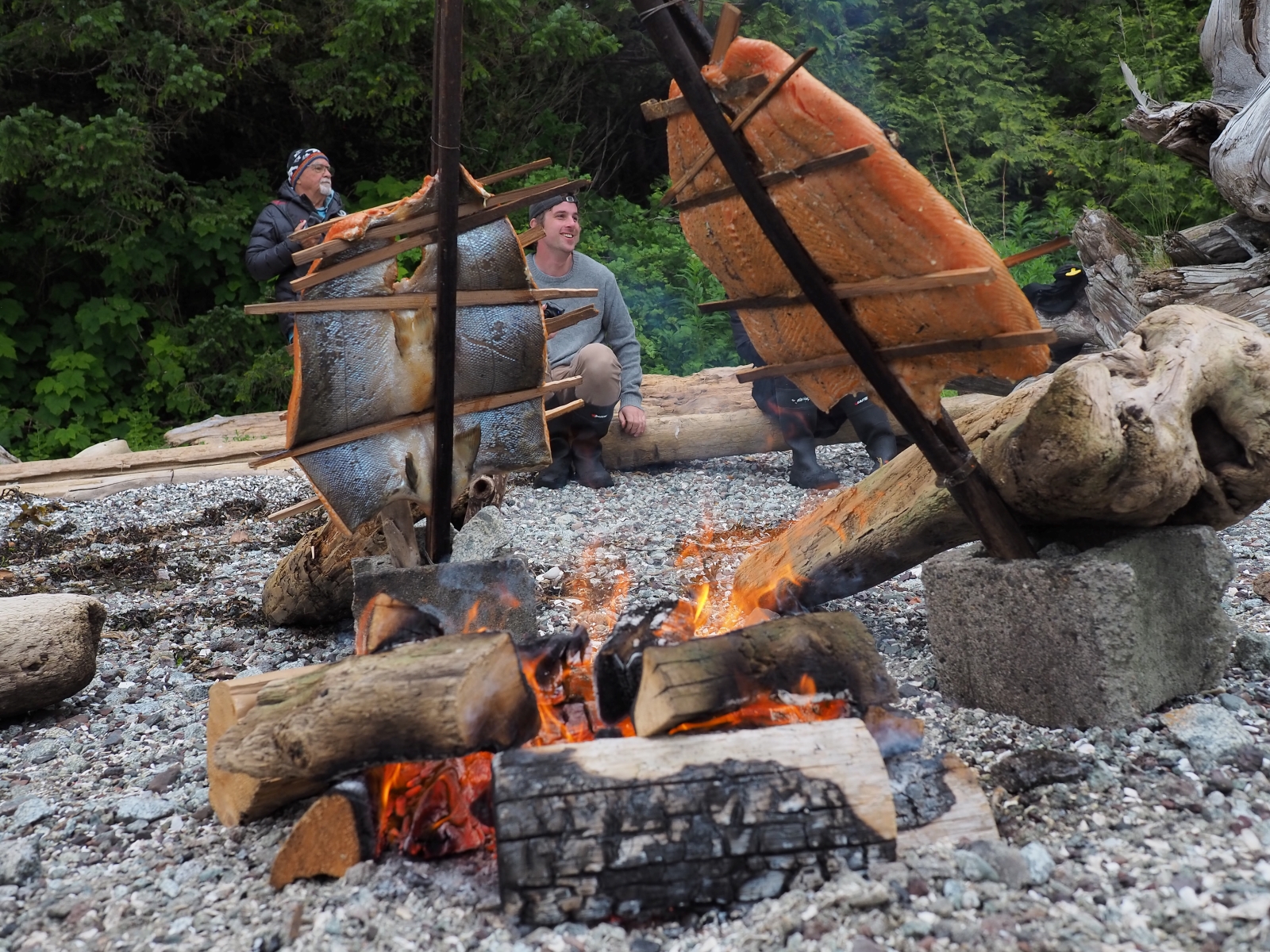
Photo: Dan Batchelor
Traditional salmon bakes in Kyuquot Sound reflect long-standing coastal food traditions, where locally caught salmon is prepared over open fire and shared as a communal meal. These gatherings remain central to cultural hospitality on the west coast.
How to get here: Most travellers reach Kyuquot by gravel logging roads from Zeballos or via water taxi/boat transfer from Fair Harbour. A guided small-ship expedition is the simplest option for those unfamiliar with logging-road travel.
9. Quatsino Sound
Deep, quiet, and richly green, Quatsino Sound is framed by moss-draped rainforest walls and calm interior passages. It’s ideal for travellers seeking sheltered exploration—hidden coves, tucked-away beaches, and a feeling of deep coastal stillness.
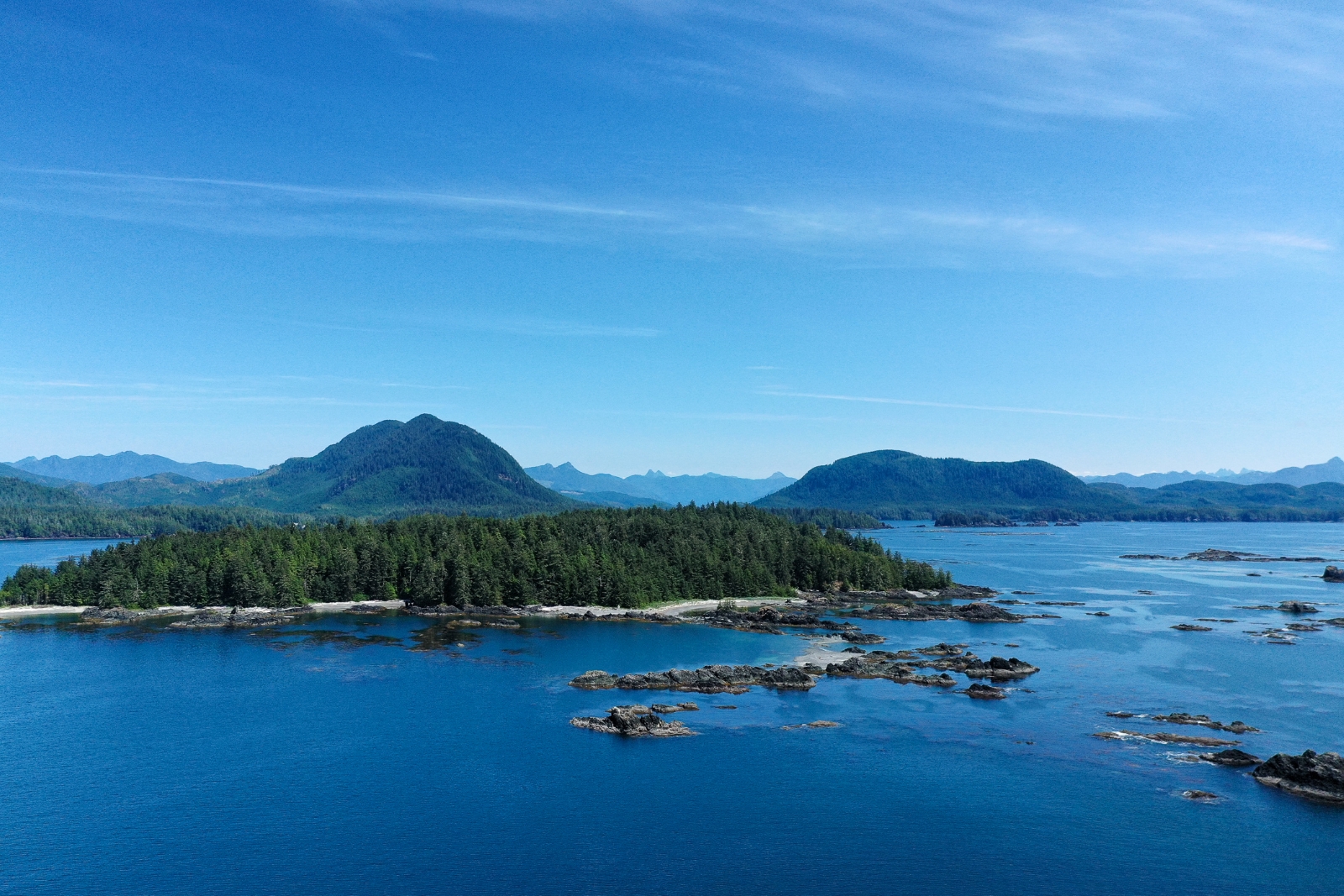
Photo: Phil Stone
Quatsino Sound is defined by calm interior waters, steep rainforest slopes, and deeply indented shorelines. Its sheltered passages have supported travel, harvesting, and settlement along this coast for thousands of years.
How to get here: Drive to Coal Harbour (near Port Hardy), then continue by boat into the sound.
10. Cape Sutil
The northernmost tip of Vancouver Island feels like the edge of the continent—wind-bent grasses, empty beaches, and sweeping views toward the mainland mountains. Wildlife sightings are common, and the sense of remoteness is absolute.
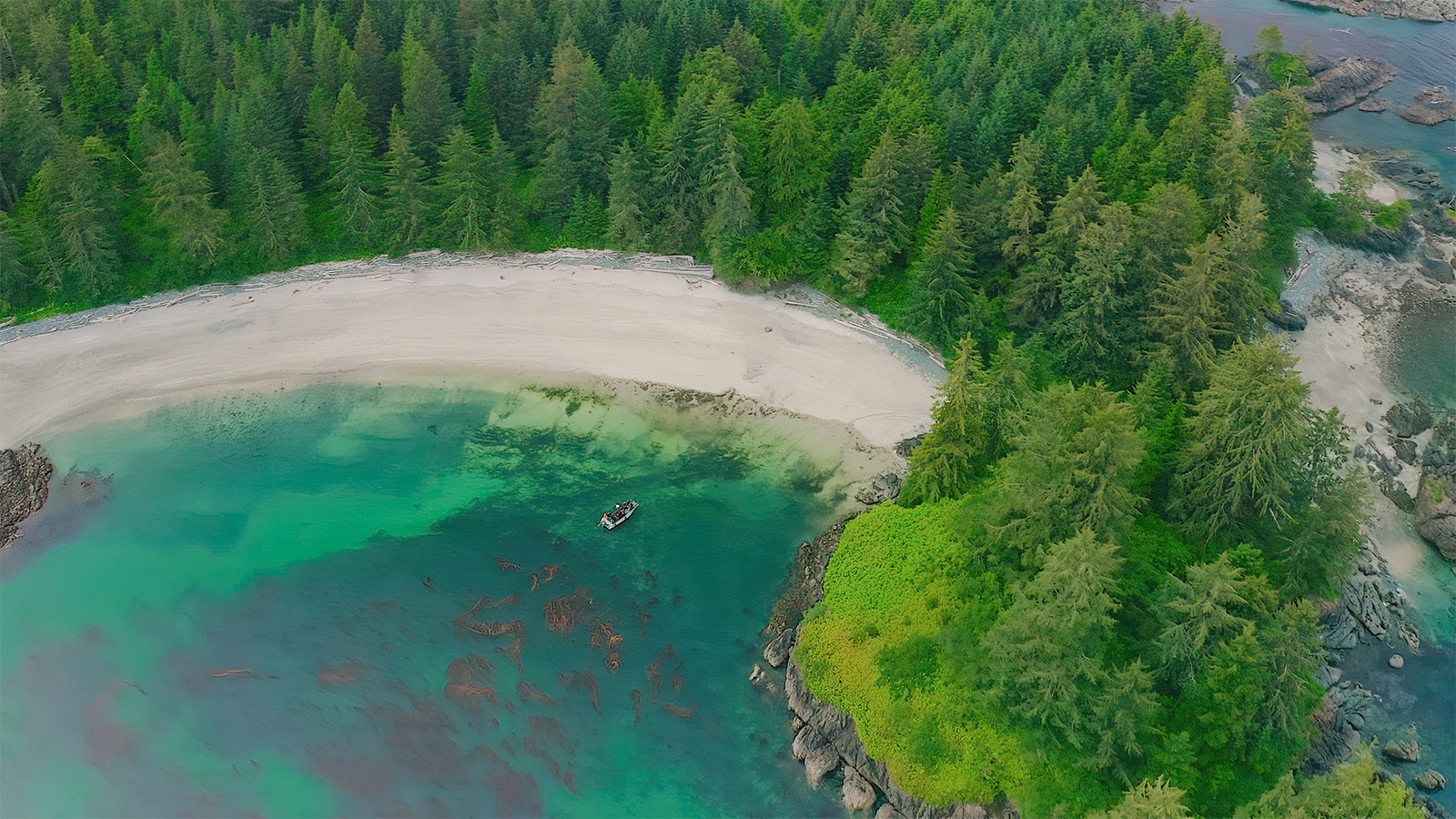
Photo: Dan Batchelor
Cape Sutil marks the northernmost point of Vancouver Island, where clear summer conditions can reveal turquoise shallows and expansive views across Queen Charlotte Strait.
How to Get There: A mix of rough logging roads and short hikes; suitable for prepared travellers with a good vehicle and navigation tools.
Travel Notes for Itinerary Planners
Most north-island highlights require some mix of driving, ferries, water taxis, or guided boating. Plan for slower travel, respect Indigenous protocols, check weather and tide predictions, and consider small groups for wildlife viewing. Spring through fall offers the most reliable conditions; winter is powerful but challenging.
Go Farther With Maple Leaf Adventures
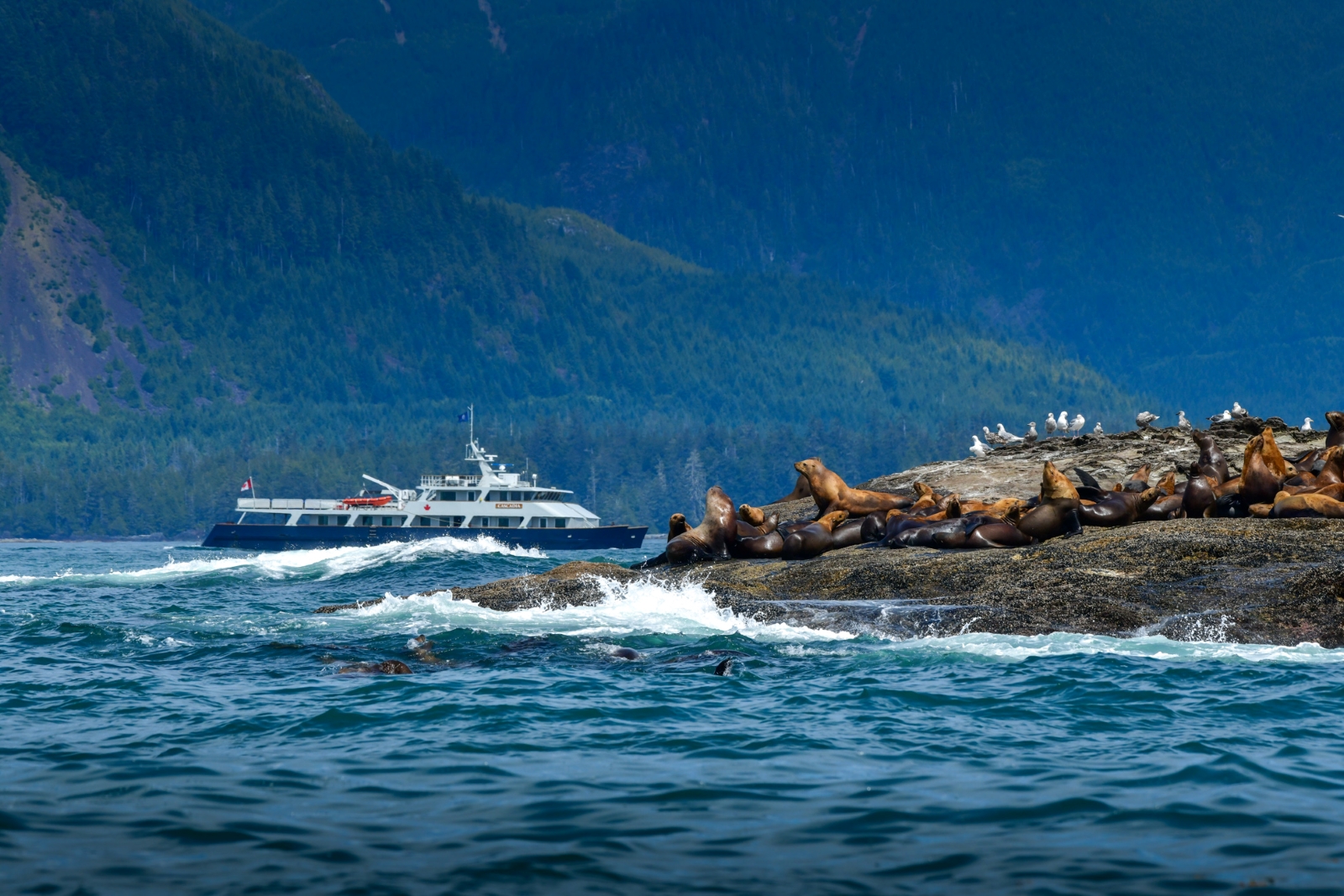
Photo: Phil Stone
Puffins are so rarely seen in British Columbia that Gwaii Haanas is one of the only places in the entire province where you might spot one.
Much of the north is best experienced the way coastal communities have travelled for generations: by boat. Maple Leaf Adventures offers small-ship journeys through Vancouver Island, the Great Bear Rainforest, and beyond—connecting guests to the cultural, ecological, and emotional heart of the coast.
If you want to explore Vancouver Island’s wildest reaches without worrying about complex access, tides, or logistics, this is the way to go.
-
Vancouver Island’s Wild Side
View ItineraryCruise Vancouver Island’s rugged Northwest, where time is measured by the rise and fall of the tide.
-
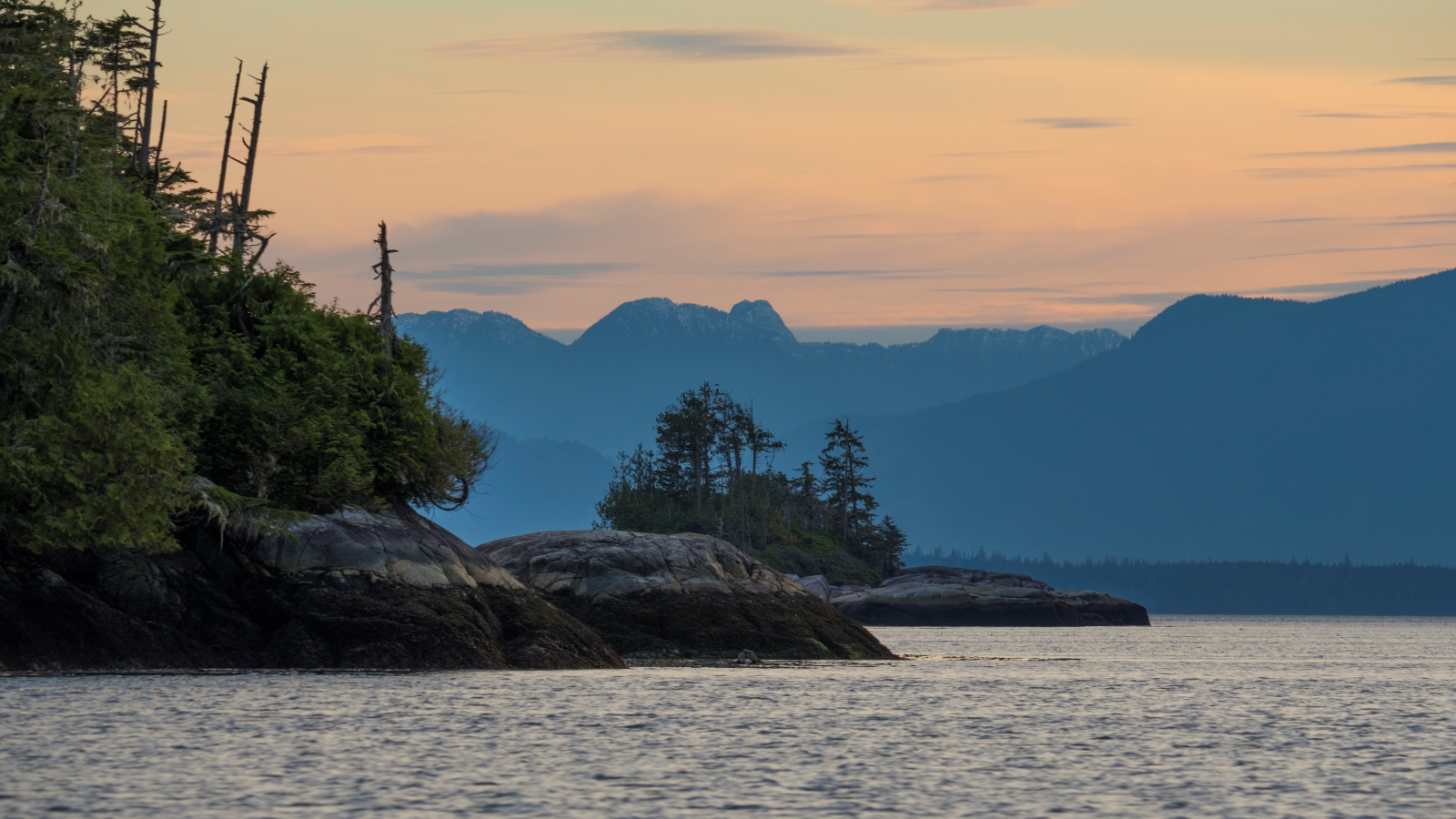
Vancouver Island’s Inside Passage
View ItinerarySpend a week cruising up Vancouver Island’s diverse coast with a world-class crew.
-
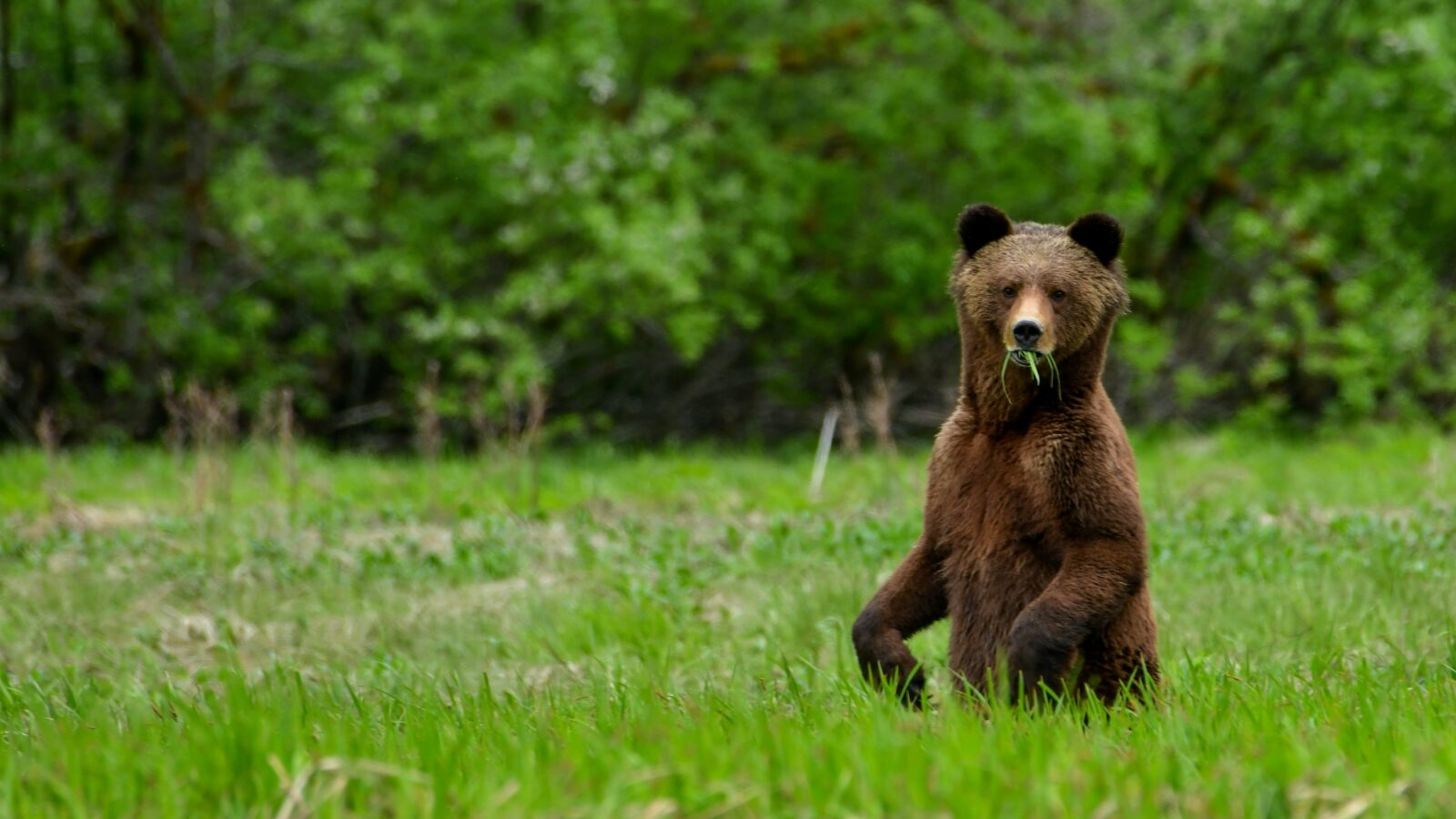
Great Bear Rainforest in Spring
View ItineraryBird migrations, newly awakened grizzly and black bears grazing on green sedges—experience it all on a small ship adventure.