

September is one of the most dynamic times to explore the Great Bear Rainforest. When the rains fill the creeks and salmon return to their natal rivers, bears, wolves and other wildlife gather to feed on the plenty.
On our first trip off the dock, guests aboard the schooner Maple Leaf spent a day alongside one of these salmon rivers. What unfolded was a remarkable look at how closely connected life here can be—from wolves fishing the river to bears feeding on their leftovers, and an unexpected encounter that followed the group back to the ship.
Here’s Captain Kevin Smith’s report from the field:
The first clues along the river
Walking into the forest with our Gitga’at guide, Marven, the group quickly found evidence that wolves were nearby: freshly caught salmon lay along the riverbank, almost entirely intact except for their missing heads.
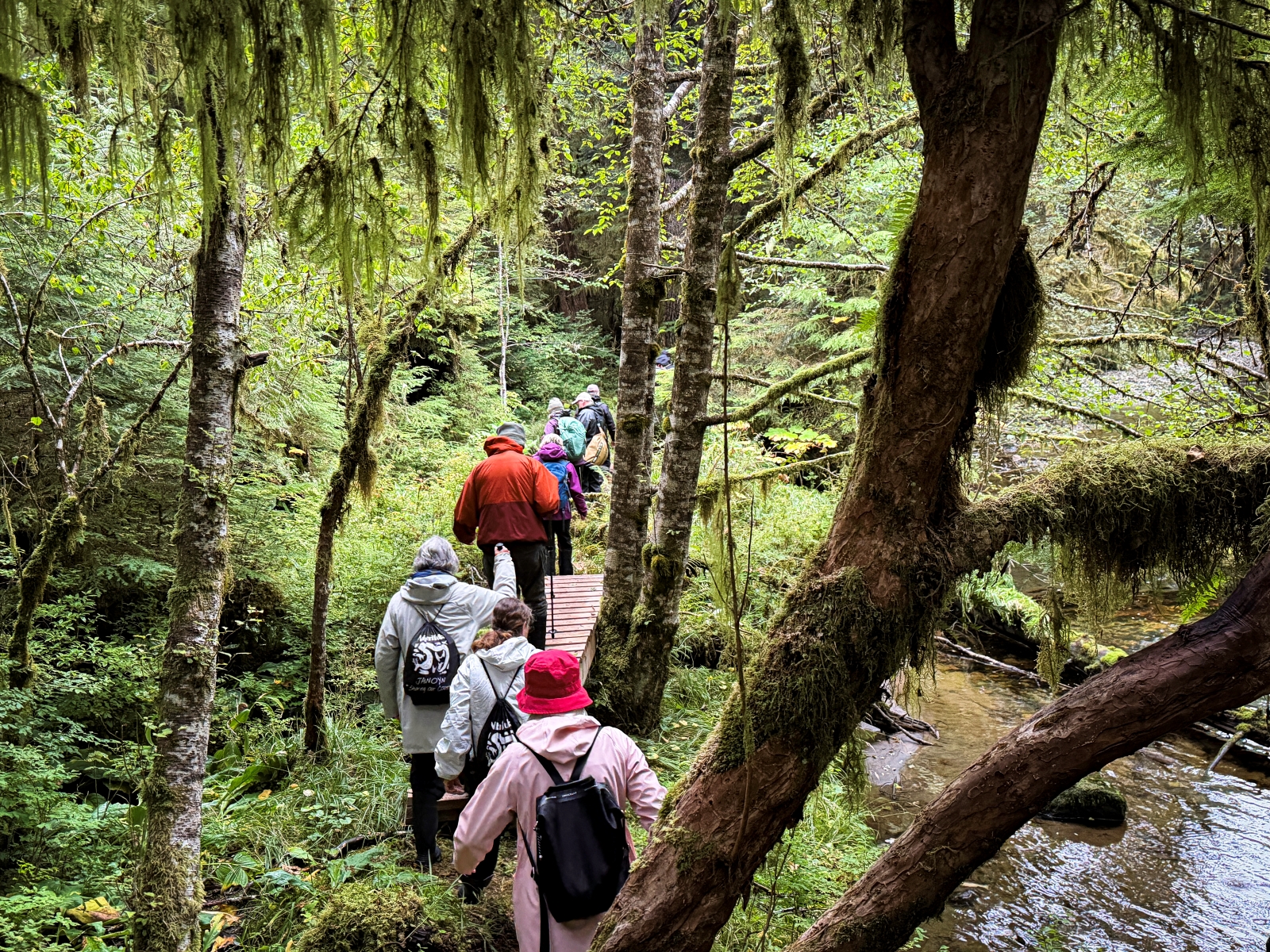
As everyone settled into the viewing area, a wolf began to howl. Then came another call, closer by, followed by the sound of what appeared to be a larger group just across the river.
“You’re just looking at each other wide-eyed,” Kevin recalls.
At around 9:30 a.m., a lone coastal wolf finally appeared, trotting upstream on the opposite bank. Nearby, a female black bear was fishing with her two nearly grown cubs.
The wolf disappeared into the forest in their direction. Moments later, the mother bear came charging out at full speed, chasing it away.
When wolves and bears share a fishing spot
About an hour later, the black bear and her cubs returned to fish. They soon discovered the salmon left behind by the wolves and began feeding on them instead.

It was an unexpected interaction: the wolves had caught the salmon and eaten what they wanted, while the bears made use of what remained.
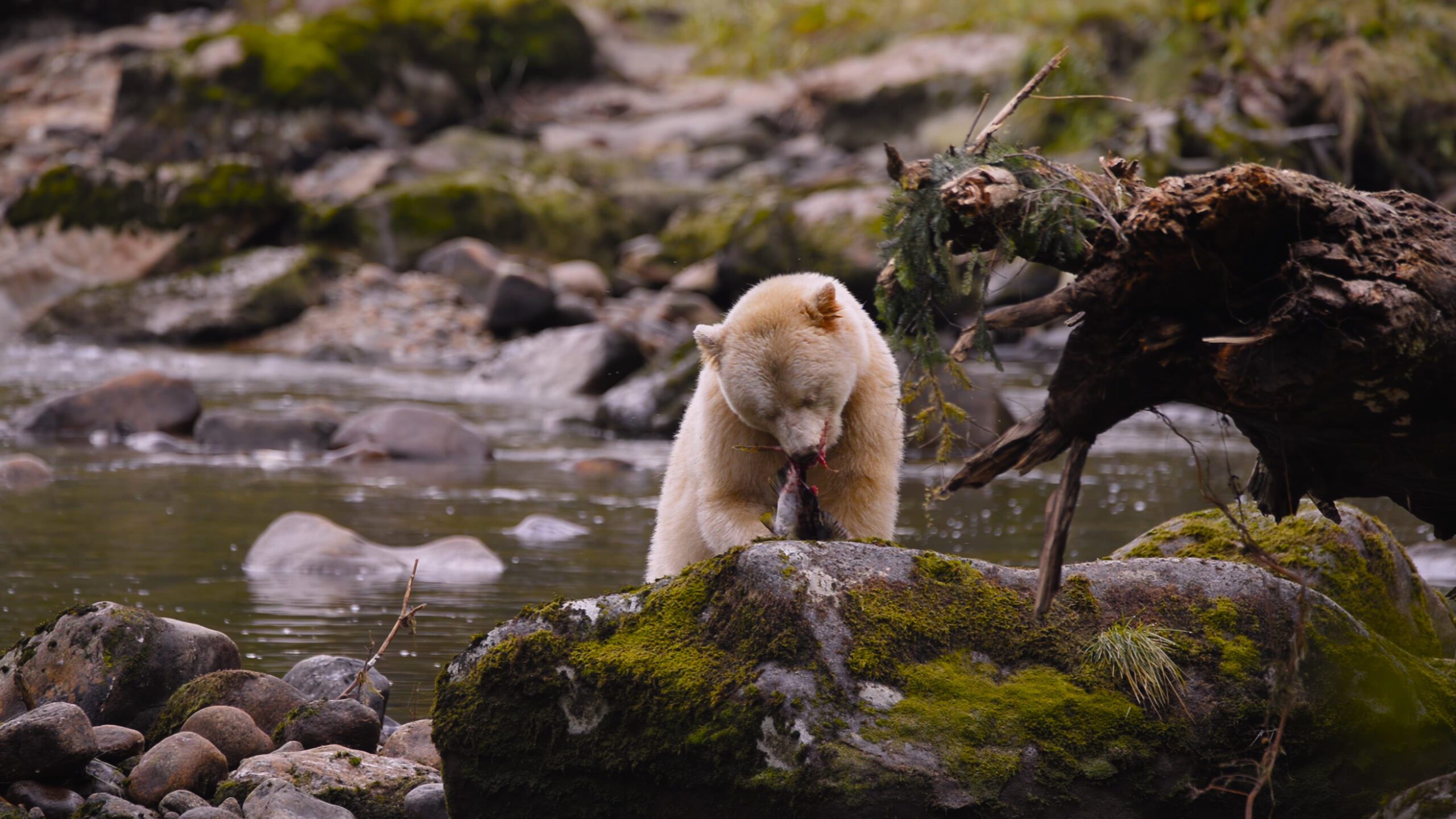
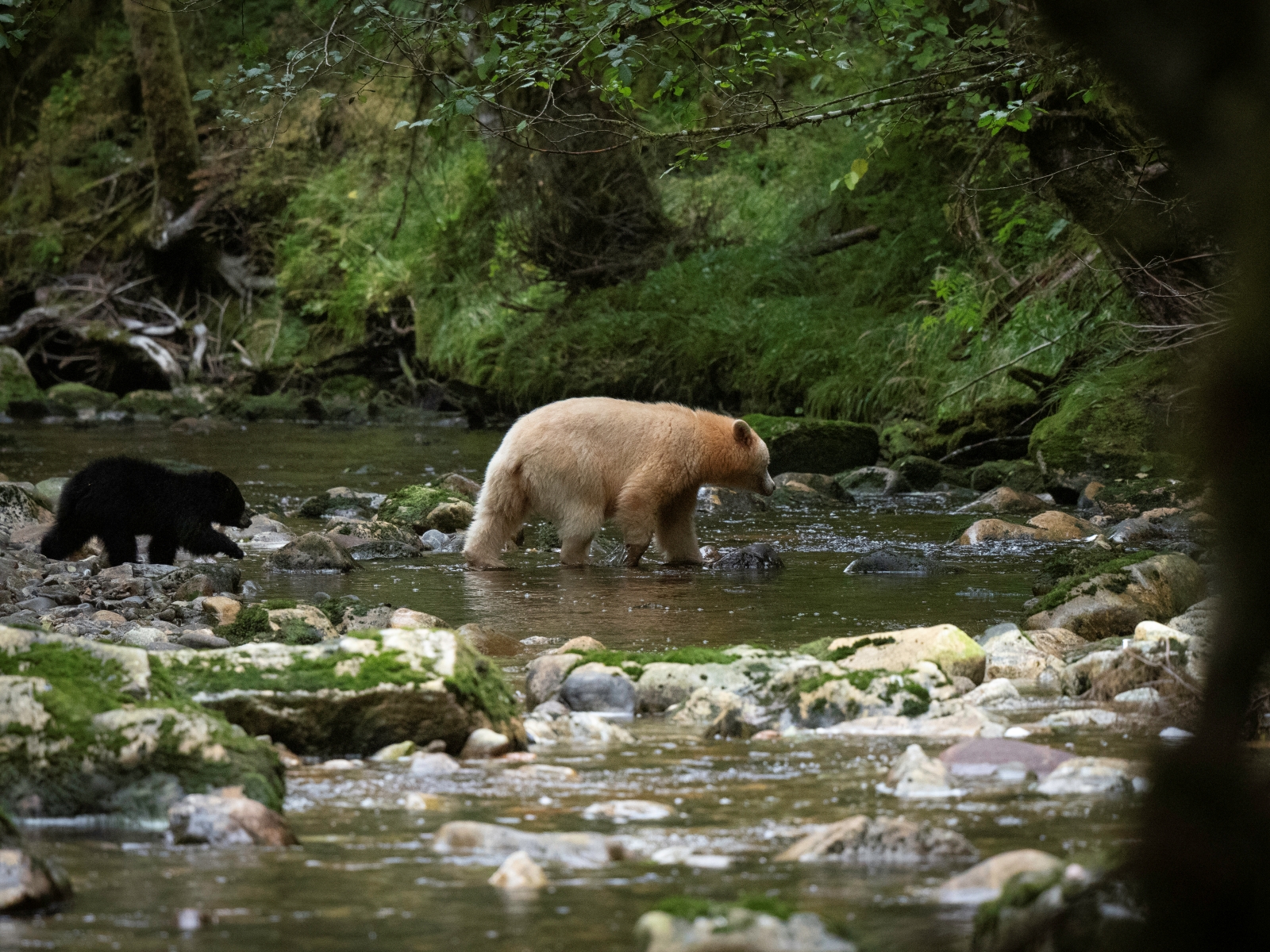
Then, shortly after noon, another bear appeared. It was Strawberry, a known spirit bear, accompanied by her small black cub.
Mother and cub remained around the river for much of the afternoon, fishing and feeding close enough for guests to watch their behaviour in detail. With the sound of wolves still fresh in everyone’s minds, Strawberry remained attentive to her young cub.
A chase that followed us back to the ship
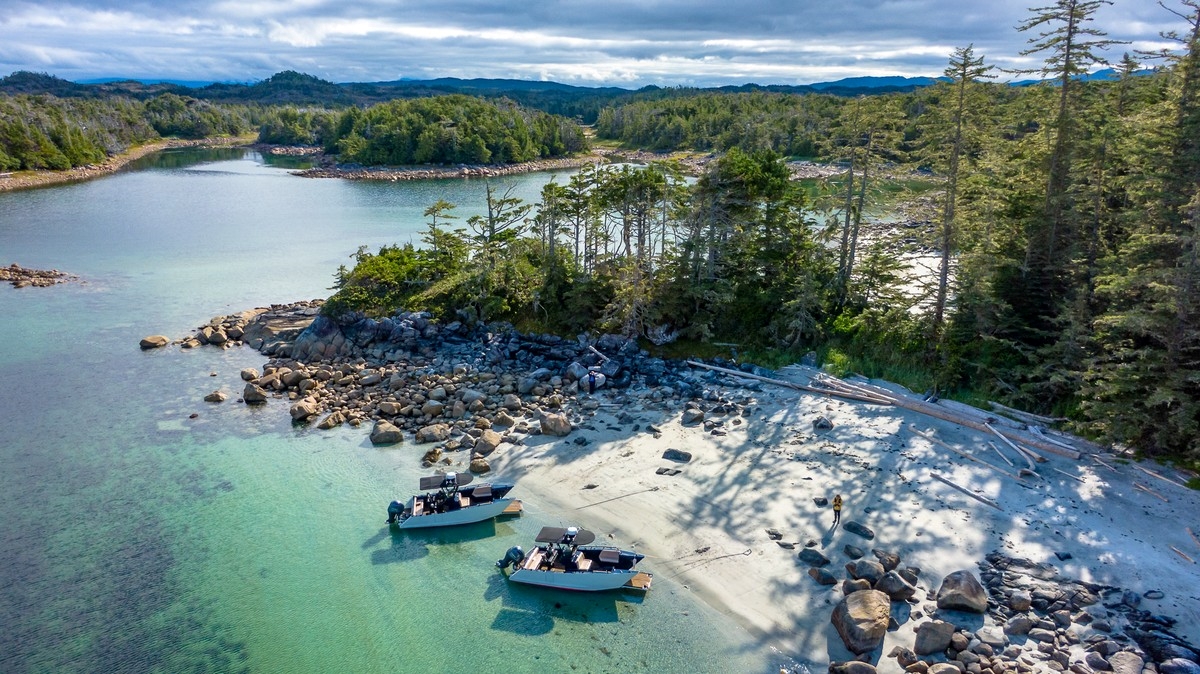
By late afternoon, it was time to return to Maple Leaf.
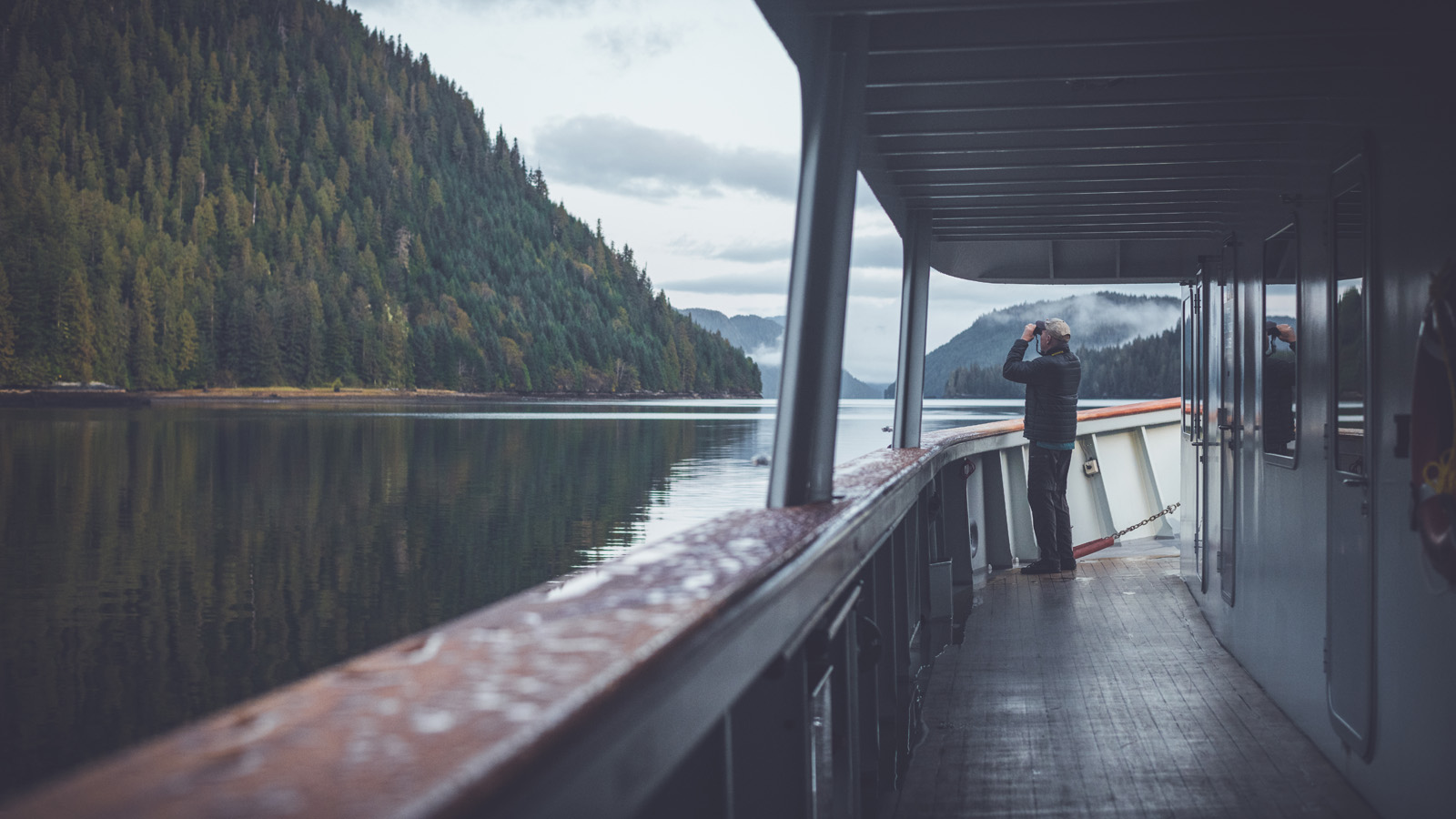
The day’s wildlife viewing had already been exceptional. But as the anchor came up and the schooner began moving, crew member Tristan spotted a deer swimming alongside the island.
Kevin suspected there was a reason it was in the water. From years spent exploring this coast, he knew to look toward the shoreline—and there, moving along the forest edge, was a wolf.
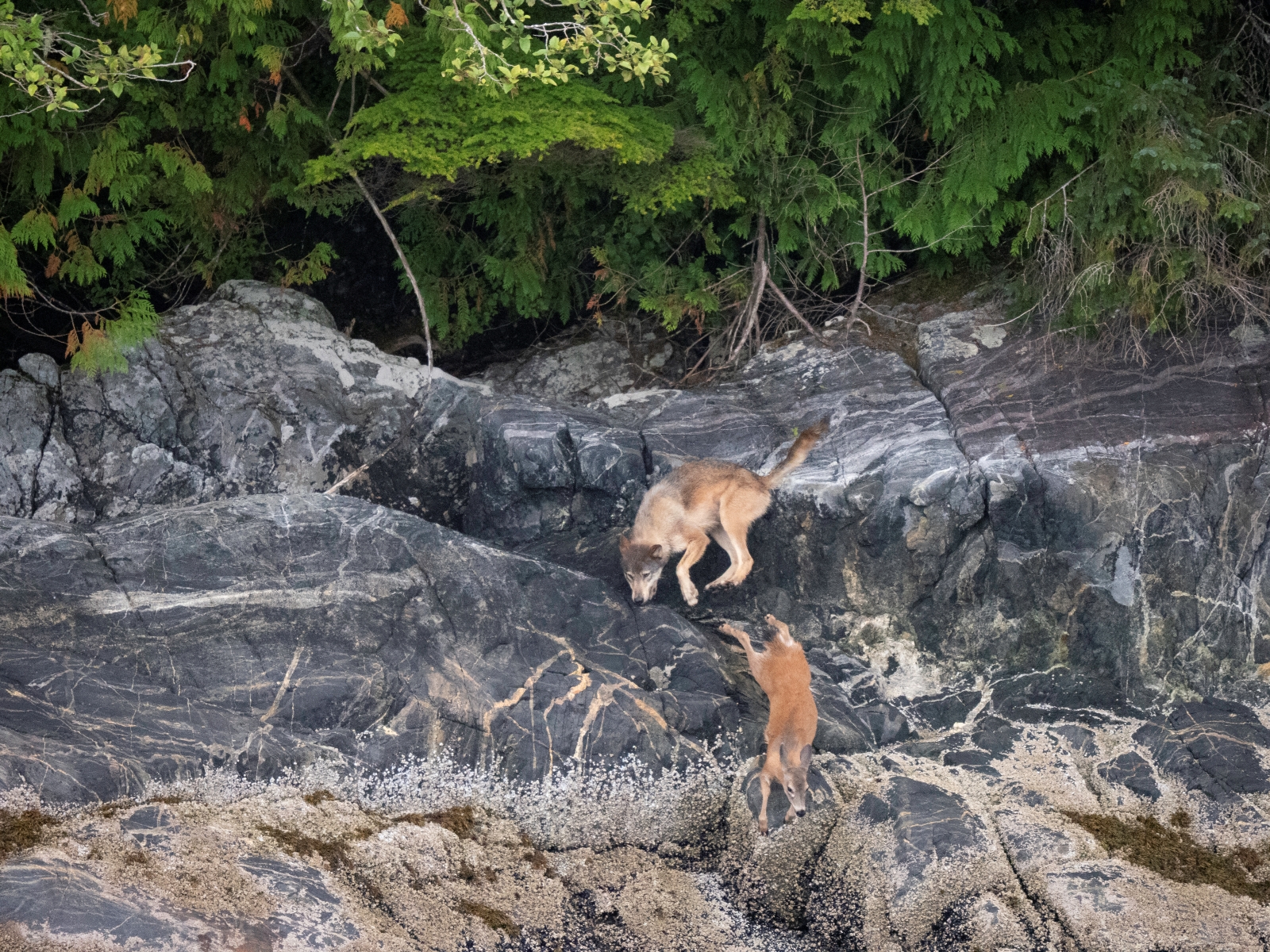
The deer was visibly tired and repeatedly attempted to return to shore. On its first attempt, the wolf caught it briefly before the deer broke free and jumped back into the water. It tried to land twice more, retreating each time when the wolf appeared.
As the encounter unfolded, Kevin radioed Marven and the other group nearby so they could watch as well.
Eventually, the deer turned away from the island and began swimming across the sound. The group watched it disappear into the distance, its ultimate fate unknown. The wolf, at least while they watched, had been unsuccessful.
For guests, crew and even their local guide, it was extraordinary behaviour to witness. Encounters with coastal wolves are uncommon enough; watching predator and prey interact this closely was rarer still.
One final sighting along the shoreline
That decision to stop and share the encounter soon paid off in an unexpected way.
As Maple Leaf prepared to continue, Marven called over the radio: another spirit bear had emerged onto a nearby beach.
Kevin repositioned the schooner and there, along the shoreline, was a large white bear. Had Tristan not noticed the swimming deer—or Kevin not recognized what its presence in the water might mean—Maple Leaf would have already been on her way. And had Kevin not radioed the other group, they too might have left before spotting the bear.
Instead, both groups shared in an extraordinary sequence of wildlife encounters.
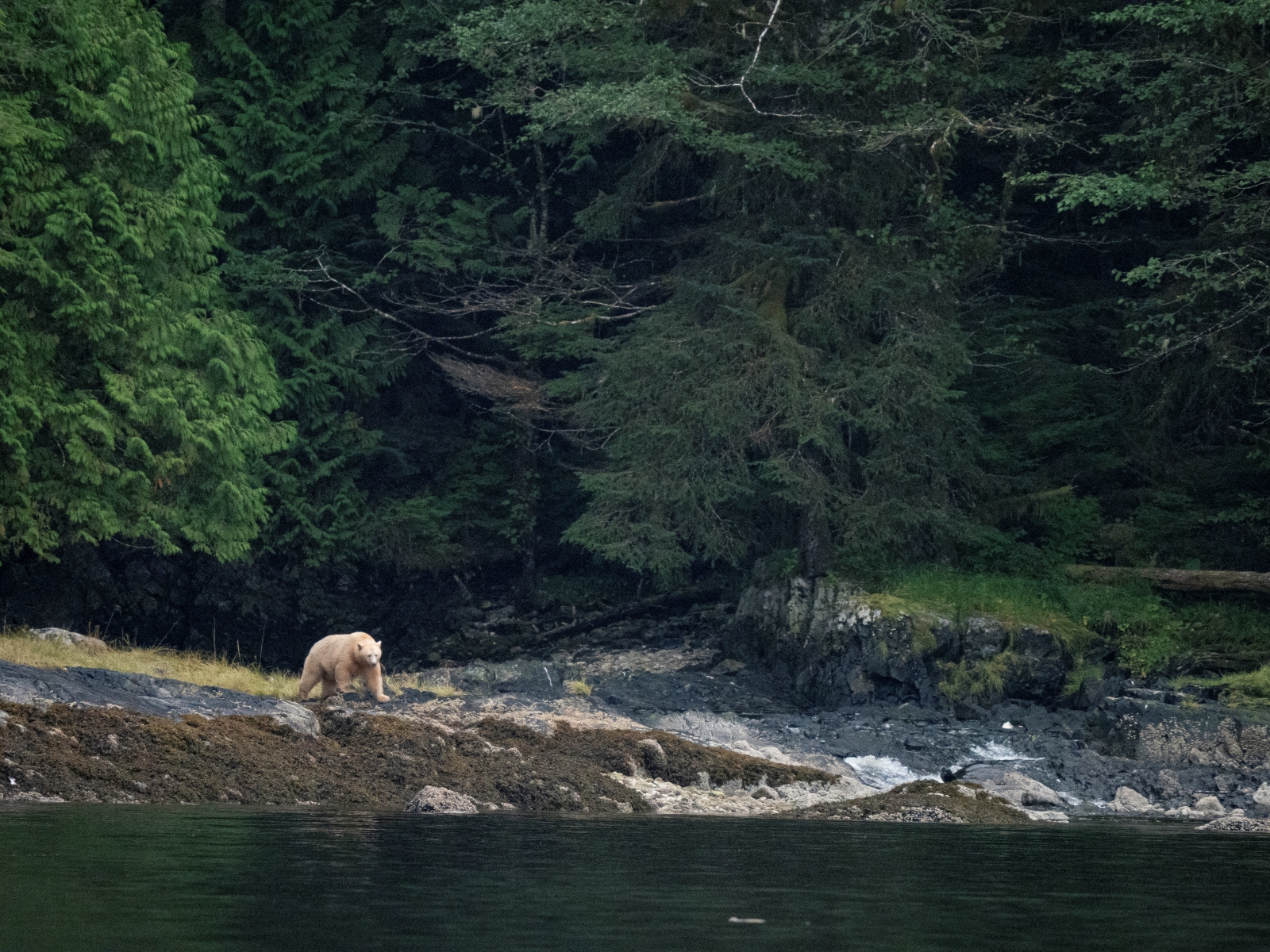
For chef Nicole, who spends much of her time aboard while guests are ashore, the sequence was especially remarkable. Within minutes, she had seen her first swimming deer, her first coastal wolf and her first spirit bear—all from the deck of Maple Leaf.
A rainforest connected by salmon
It was an exceptionally rare day. But the relationships behind it are part of an ancient cycle that plays out here every fall.
Salmon return from the ocean carrying marine nutrients upstream. Wolves and bears pull them from the rivers and carry their catch into the surrounding forest, where uneaten remains break down and return those nutrients to the soil—feeding the forests that shade the salmon streams below.
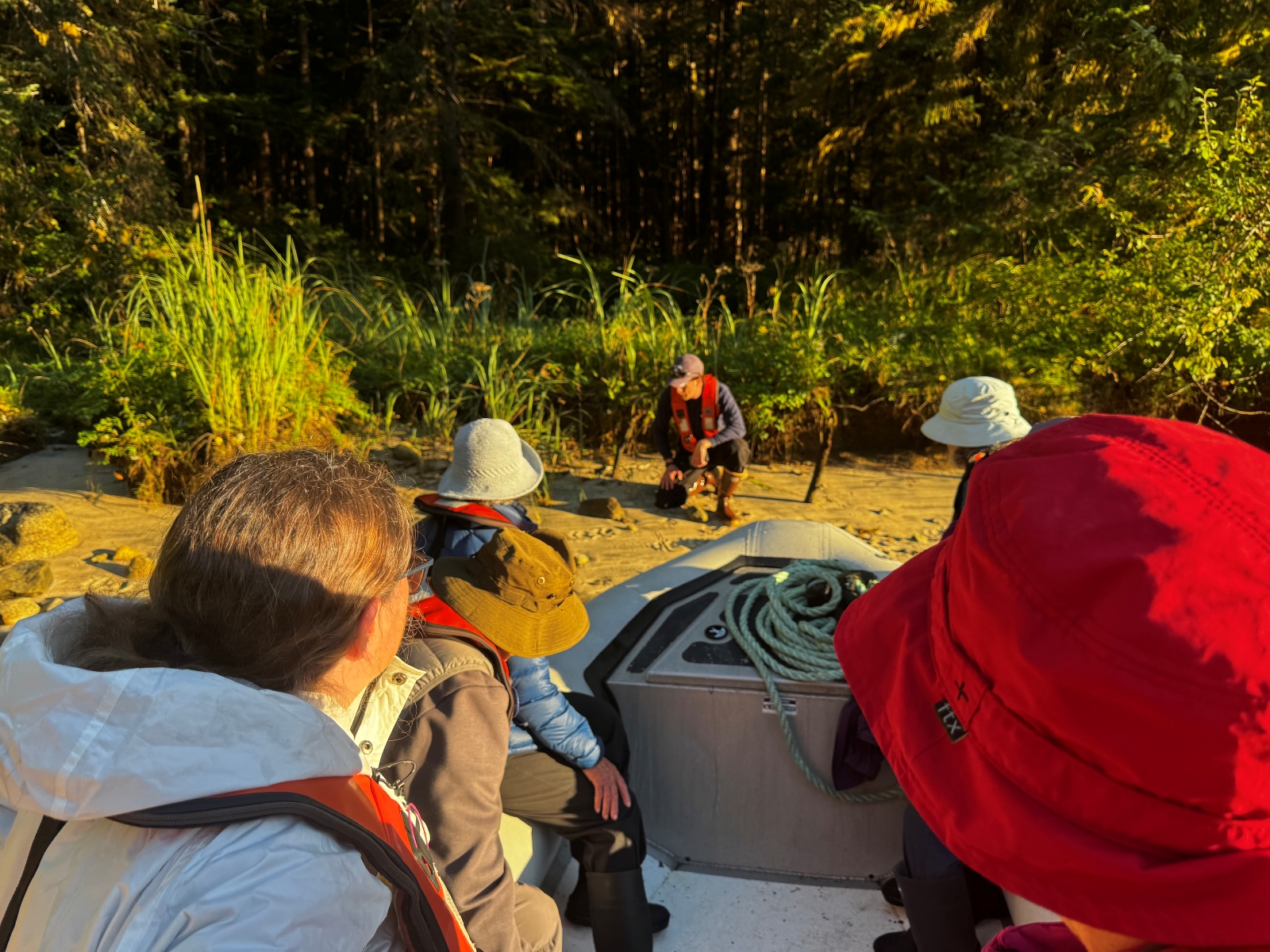
On this early fall expedition, guests aboard Maple Leaf had the remarkable opportunity to watch some of those connections unfold in real time: predators, prey, and, ultimately, the river feeding the forest.
In the Great Bear Rainforest, following the salmon run means entering an ecosystem in motion, where the movements of one animal can shape the opportunities of another.
Sometimes, staying curious for just a few minutes longer changes the whole day.